Week two: the week Cerberus got a DM
A DM screen that runs the fight, damage that lands where it's aimed, buffs that show up on the right sheet, actual battle music, and a playtest that found 101 things. Here's how the table came together.
Week one was all about one hero and one turn. Week two, Cerberus learned to sit at a table. A DM can run the whole fight from their own device, damage goes where you aim it, and when someone casts Haste on you, it actually shows up on your sheet. Then Fable ran the first full playtest of the whole app, and honestly, it had notes. 101 of them.
That was 91 merged pull requests, almost all of them built with Opus, which is way too much for one post. So this one sticks to the table, the soundtrack and the playtest, and everything else gets crammed into one breath at the end.
The DM’s device is the table
The idea started pretty simple. I wanted a DM to host a session, players to join it, the DM to track initiative, and everyone to get dropped into their turn automatically.
I still liked solo mode, where you track your own turns, so I didn’t want to throw it out. The trick was that a table only presses buttons a player already had. The DM’s device starts each hero’s turn on that player’s sheet and ends combat for everybody. Players still roll their own Initiative and end their own turns, because that’s what you’d do at a real table anyway.
Leave the table and you’re just back on your normal sheet. Nothing to undo.
The DM gets a screen of their own, and it’s stacked: all 329 monster stat blocks from the SRD 5.2, monster cards that track HP, conditions, Recharge and Legendary Actions, and prepared fights rated with the SRD’s encounter difficulty for your party. On a tablet it splits in two, initiative on the left and whoever’s up on the right.
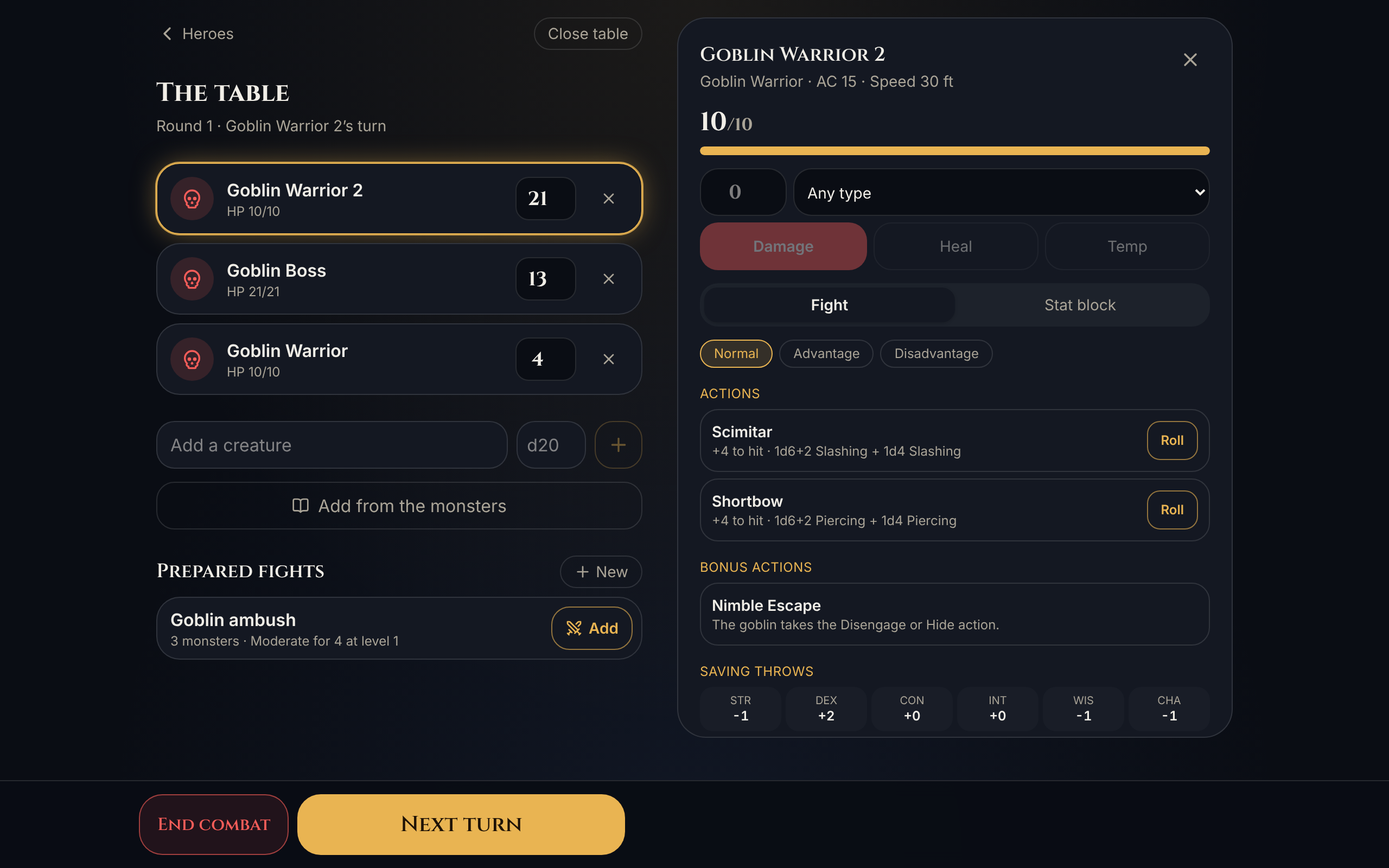
One rule decides where every number lives: the DM’s device owns the monsters, and each phone owns its own hero. Monster HP lives on the DM’s screen. Your HP lives on your phone, and your phone applies your Resistances. Players only ever see a monster’s name and whether it’s Bloodied, which is the SRD 5.2 word for half HP or less. I asked for every term like that in the SRD and nope, Bloodied is the only one.
Then I flipped it around: the DM should get the same kind of view of the heroes. So your actual HP number never leaves your phone either. The DM sees Healthy, Bloodied, Dying, Stable or Dead, plus your AC and conditions. Enough to run the fight, and nobody’s sheet is an open book.
Don’t just show the fight, track it
The first DM screen showed you the monsters. Cool, but you were still doing all the math yourself. What I really wanted was for damage rolls to just take the health off. Whoever’s attacking or casting, DM or player, picks who they’re aiming at, and the HP popup only sticks around for Hit Dice and the odd manual fix.
So that’s what we built. Roll damage, pick who you’re hitting, and the number lands on the right device after Immunities and Resistances.
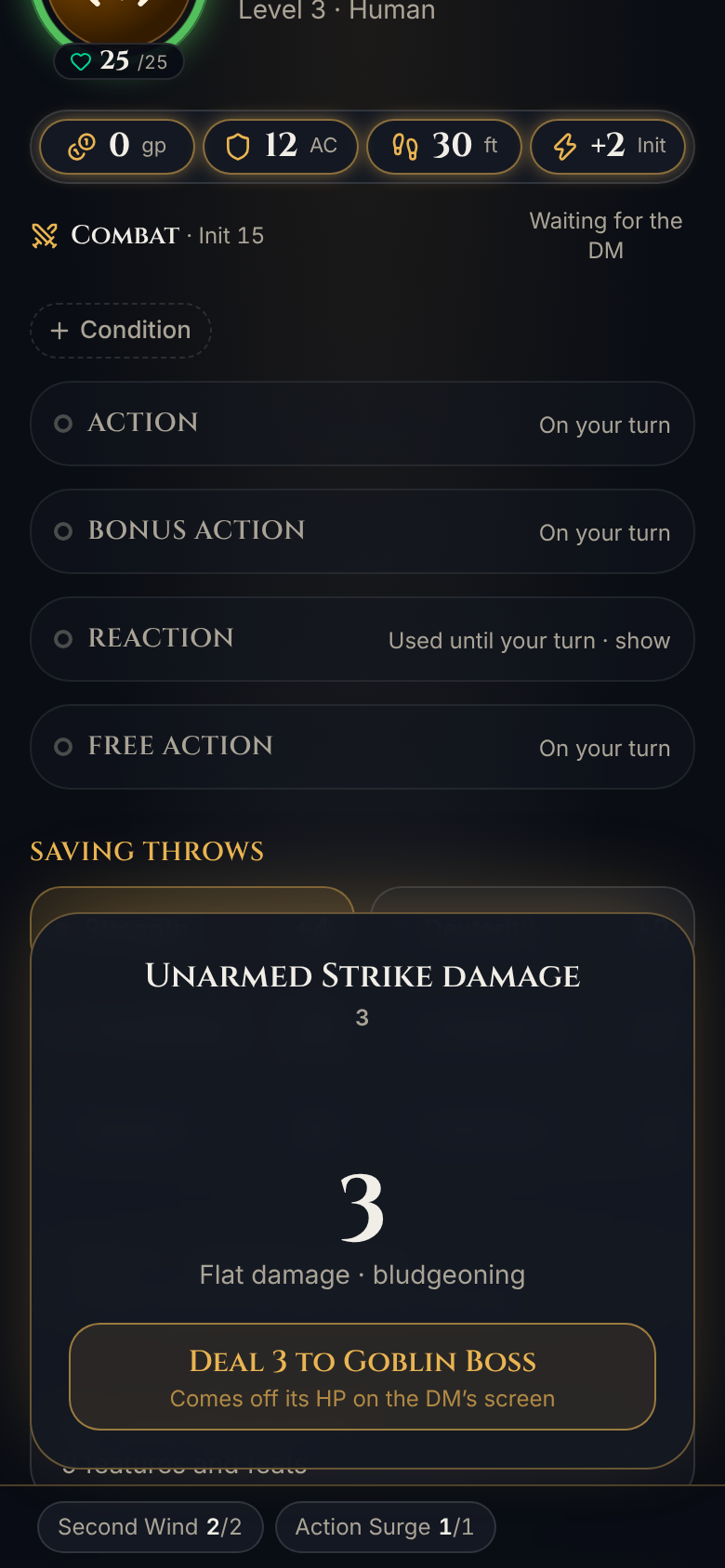
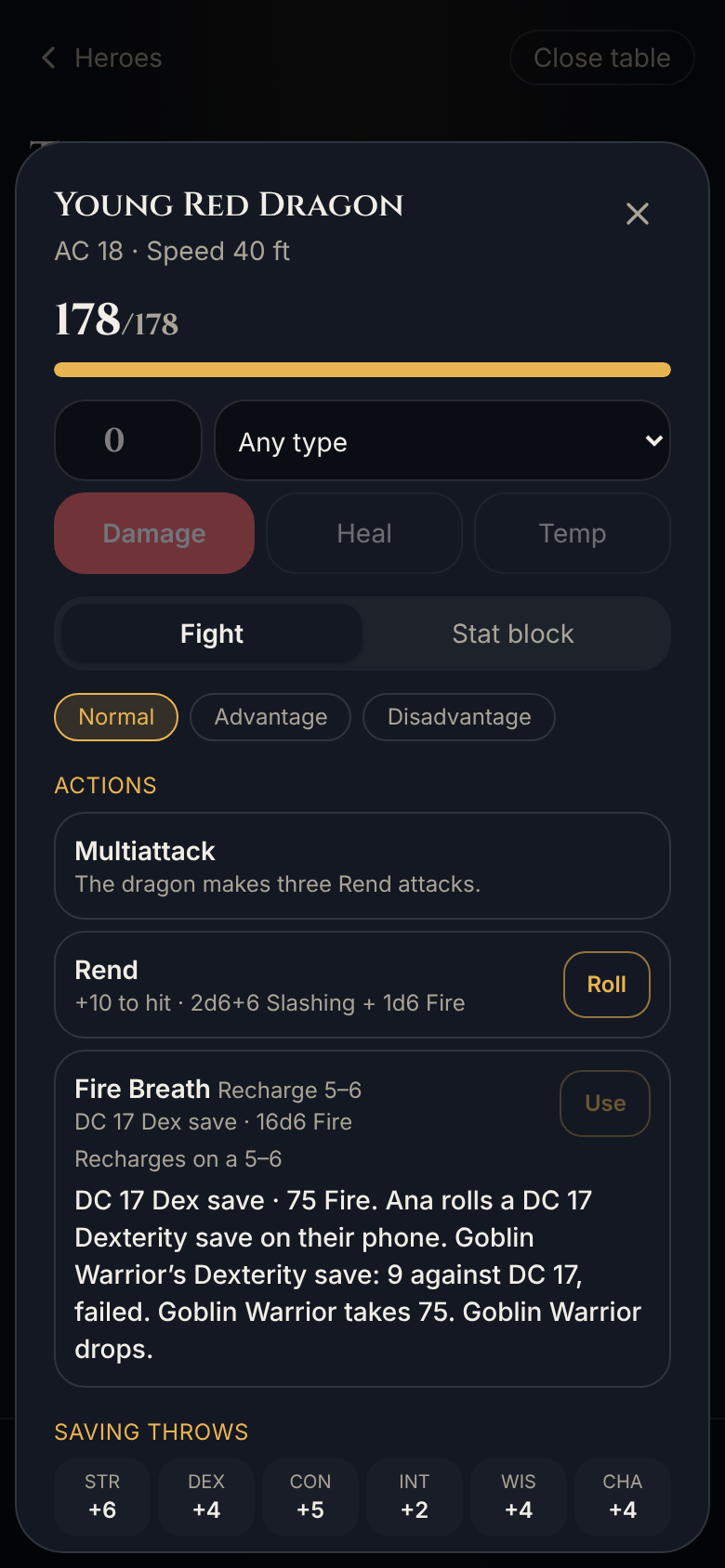
Saves work the same way. An area spell or a breath weapon asks who got caught in it and rolls damage once. A Fireball rolls its 8d6 a single time, then every creature saves on its own screen with its own bonus, and anyone who makes it takes half.
I also wanted a real dice switch. Turn it on and the app asks for your physical roll and you just type in the number.
Buffs follow the target
This one started small. I had Concentration going on Fly and the chip said “10 min” turn after turn after turn. It looked frozen. It wasn’t. The timer was running fine, the chip was just rounding. So now timed effects count rounds in combat (100, 99, 98, all the way down to “Last round”) and show a clock outside of it. They tick on your turn and end themselves.
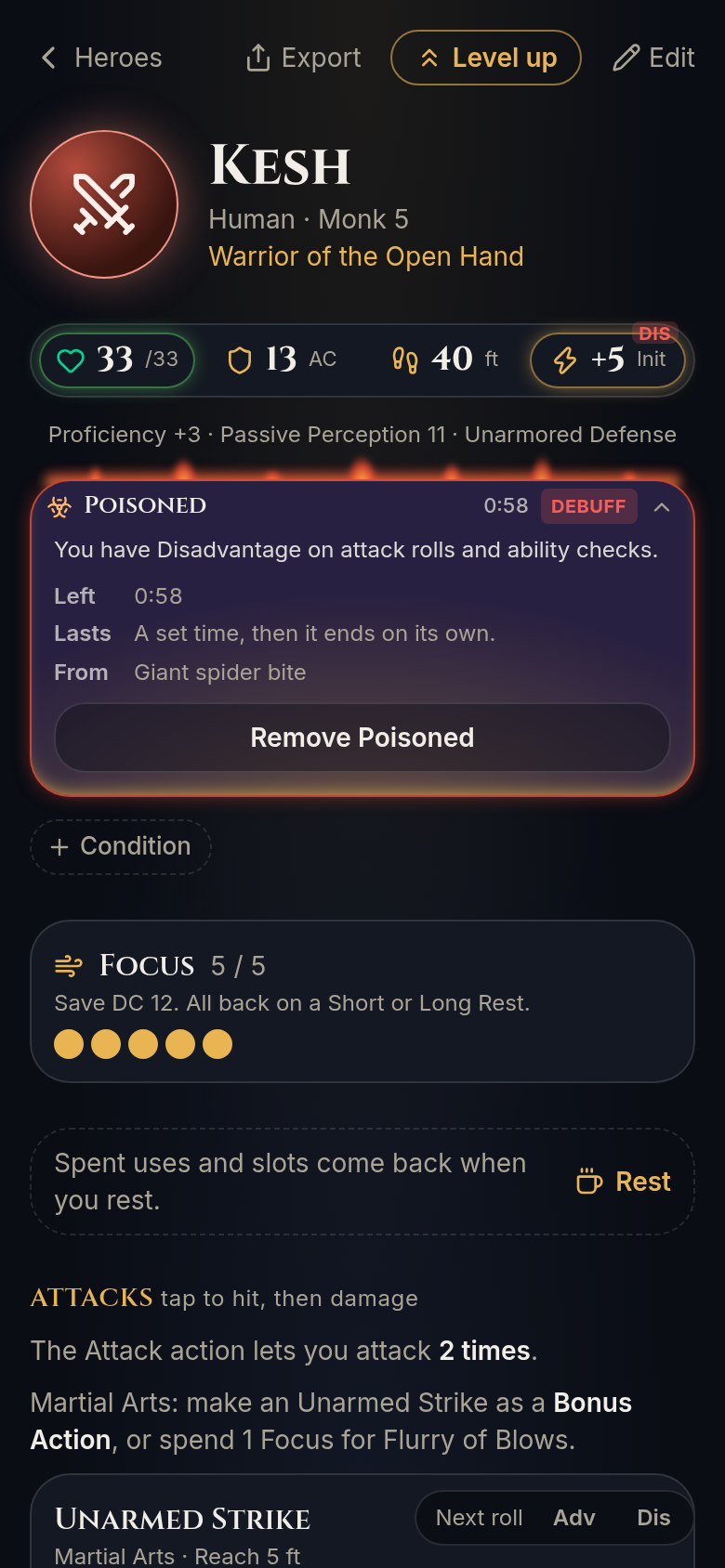
Fixing that showed the next gap. Spells without Concentration, like Mage Armor, weren’t tracked at all, and Mage Armor should only count while you’re not wearing armor. Then the table made a third thing pretty obvious: you’re already picking a target, so the buff should just land on that hero’s sheet.
And now it does. Ana casts Haste on Bo, a level 5 Fighter, and Bo’s phone says so. AC goes from 16 to 18, Speed goes from 30 to 60 feet, and both go right back the second Ana’s Concentration drops.
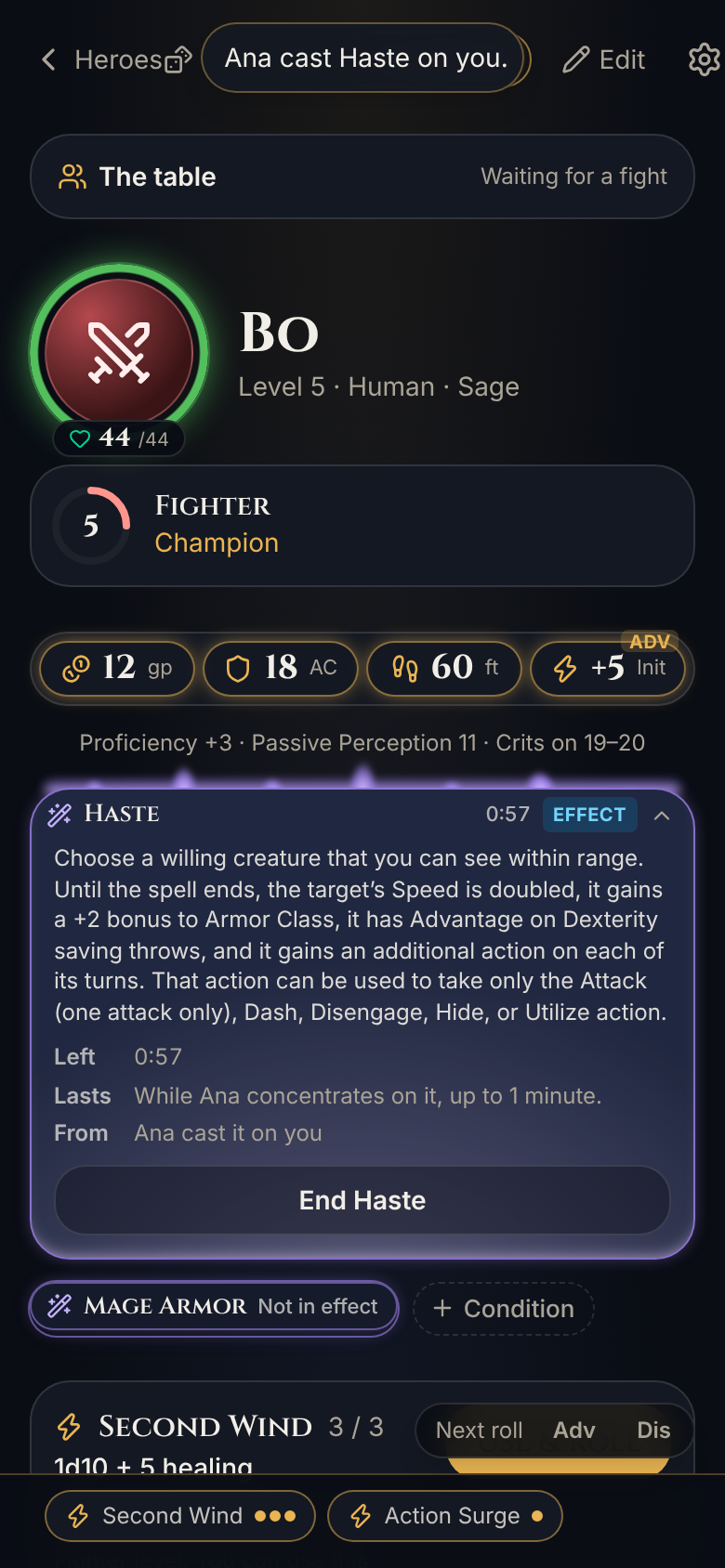
The same timers also brought Rage upkeep, Dash adding to your movement, and condition saves that roll themselves.
Making it sound like a fight
Sounds were working. They just weren’t doing much for me. Honestly? A little meh. Nobody gets hyped over a utility-grade dice clack.
So we built an audition page and I went through it on my phone with headphones, tagging every clip for a moment: a roll, a nat 20, a nat 1, a hit, a spell, coins. Candidates came from CC0 game audio and the free, royalty-free GDC game audio bundles. That’s 230 GB across ten years of bundles, which sounds like a lot, and it turned out to be wide but not deep. The whole decade had only a handful of real dice recordings, so every single one made the cut.
97 clips survived, plus 60 spell sounds. For now each moment plays a random pick from its set, and sounds for specific spells are on the list for later.
For music, I wanted rolling Initiative to feel like you just walked into the fight, the way battle music fires up in Pokémon or Expedition 33. After auditioning, I skipped intros and victory fanfares for now and went straight into a combat loop. Exploring music cuts into battle when you roll Initiative and fades back out when combat ends.
Music has its own switch, separate from Sounds, and it starts off. Picture five phones at a real table all blasting battle music over the DM’s own playlist. Yeah, no.
The music did break one thing, just not the app. Bundling about 21 MB of it pushed the Android test build to 31 MB, which is over a 10 MB attachment limit on the step that shares test builds. Every check passed. Only that last step fell over. The fix posts a download link instead. I kept the music bundled anyway so it works offline from the very first launch, because offline-first is one of my core rules for this app.
The first full playtest
After two weeks of moving fast, nobody had played the whole app end to end in one sitting. So Fable did. We wrote up 36 scenarios covering the builder, level-up, the sheet, solo combat, table play, accessibility and sound, and Fable ran every one from a wiped device.
It found 101 things. Zero blockers, thankfully: 10 major, 49 minor and 42 polish. I went through every one: agreed with 93, tweaked 8, tossed none. The fixes landed the next day in six focused batches.
The big ones:
- Rules the sheet didn’t enforce yet. Dropping to 0 HP did nothing, and some class actions, like Reckless Attack, Flurry of Blows and some Channel Divinity options, just weren’t there. Fable fixed those too: 0 HP now knocks you out and prompts your death save, and the missing actions are in combat.
- The builder picked a class’s key abilities from its saving throws instead of its primary ability.
- The combat wheel sorted its rings alphabetically, so a caster’s real spells got buried.
- Table play worked end to end. Rejoining after a page reload didn’t.
Two of my tweaks changed direction. You now pick your target before you roll, so a crit card never needs a button for every monster, and that one already shipped. The sheet’s top bar and resource dock are up for a rethink.
One more bug got caught before it merged. Replaying a table session in two browser windows showed a player’s sheet sometimes starting their turn again right after they ended it. Fixed, and each sheet’s round now stays in step with the table’s.
Which brings me to the honest part. Table play was built and tested between browser windows. The native Wi-Fi plugin compiles for iOS and Android, but we haven’t played a table across real phones yet. That’s next.
Also in the pile
The rest of the week, in one breath: a free dice roller with keep and drop notation, every SRD magic item in the inventory and store with attunement and charges, mounts, vehicles, food, lodging and services in the store, a smoother spin and snap on the combat wheel, two rounds of sheet and combat layout rework, Quickened spells lighting up both resources they spend, and a move to SvelteKit 3, which Fable handled.
That’s week two. See you next week.