Week eight: same test, three models
We ran the same player test on Fable, Opus and Sonnet to see who should do our testing. Then five more test passes chased the last majors while spells that linger, like Stinking Cloud and Earthquake, came to Cerberus. Plus the app got its face: a dog.
Week seven was about counting the features that did nothing. Week eight was the grind that comes after: five more full test passes, 14 through 18, each one fixed before the next started. The bar is zero majors. We got close on most tracks and kept missing by exactly one on another.
But before any of that, I wanted to settle a question that had been bugging me. Who should actually be running these tests?
Same test, three models
Pass 14 was the first one I ran on Fable 5.2. When it was done, I wanted to know how it stacked up against Opus and Sonnet. So we ran the player test again on Opus 5.5 and Sonnet 5.5, from the same brief and the same commit.
Here’s how it shook out:
- Fable found the most real issues, 4 minor and 7 polish, and nine of them were ones the other two missed. It also covered the most ground.
- Opus was the fastest, at about 39 minutes. It caught three real issues Fable missed, covered less, and filed one false positive.
- Sonnet stopped after 17 minutes of a 90 minute budget, with no findings.
So Fable runs the test passes now, and Opus is the fallback and the second pair of eyes. I did put pass 15 on Opus anyway, and Fable ran the rest.
Honestly, take it with a grain of salt. It’s one run per model on one track. A strong hint, not a benchmark. And one thing almost skewed it: Fable’s run paused partway through, and that got logged as a crash. It wasn’t. It was a usage limit, and the run picked right back up after a nudge. That went down as a capacity cost, not a model failure, which seemed like the fair call.
Spells that stick around
The big new ground this week was spells that don’t just go off and end. They sit on the field and keep doing things, round after round.
Stinking Cloud is the poster child. Every creature inside it gets asked for a Constitution save as its turn starts, every turn, and a hero who’s caught in it loses their action. Web, Sleet Storm, Earthquake and Power Word Stun now work the same way at a table.
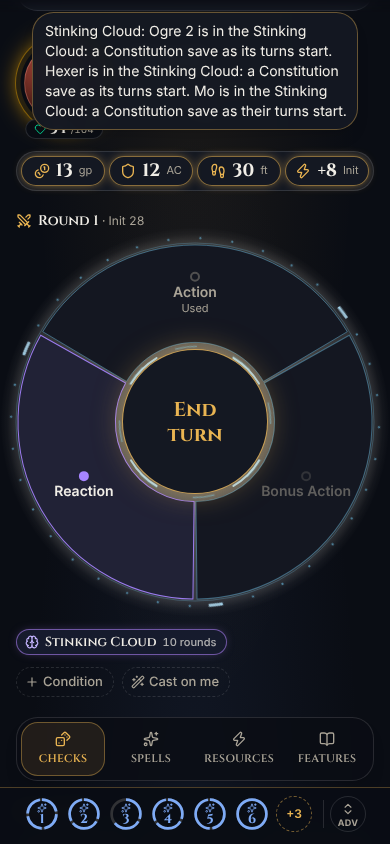
The DM sees it from the other end. The saves roll in on the table, one notice at a time.
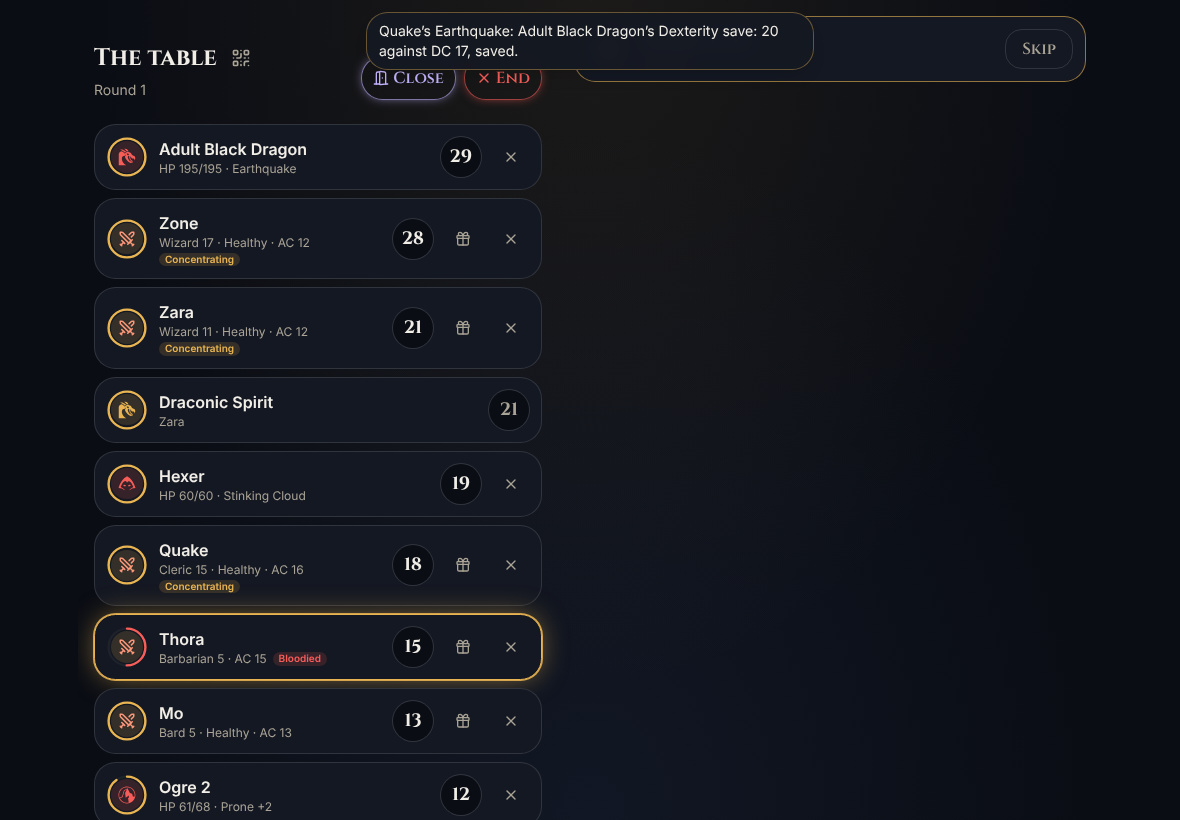
Faerie Fire got the same care: each creature caught makes a Dexterity save, and attacks against the ones outlined get Advantage until Concentration ends. A mummy’s Rotting Fist curse now plays on heroes and companions too, all the way to turning its victim to dust, and Remove Curse can lift it off a friend’s companion.
Zero majors, minus one
Every pass is judged on one thing per track: are there any majors left? The player, classes and homebrew tracks mostly cleared that bar this week. Homebrew had none all week.
The fight track is where the new spells landed, and it found exactly one major on every pass from 15 to 18. Each fix opened new ground, and the next pass found the gap in it. Pass 17’s major was inside the brand new lingering spell code. Pass 18’s was in Concentration. Each round got fixed before the next one started, and the leftovers rolled into the next round’s fixes.
Is that slower than I hoped? Yep. But it’s the same thing as last week. The passes are measuring what’s actually playable, and I’d rather they keep doing that than tell me what I want to hear.
It also got me asking what the passes cover in the first place. I wanted to be sure they’d done at least some high level play and some multiclassing, so we started an audit of what the passes have and haven’t touched.
The app got its face
Cerberus had been running on the placeholder icon and splash. Not anymore. Opus swapped them for a dog emblem: a gold dog’s head in a gold ring, on the app’s dark background.
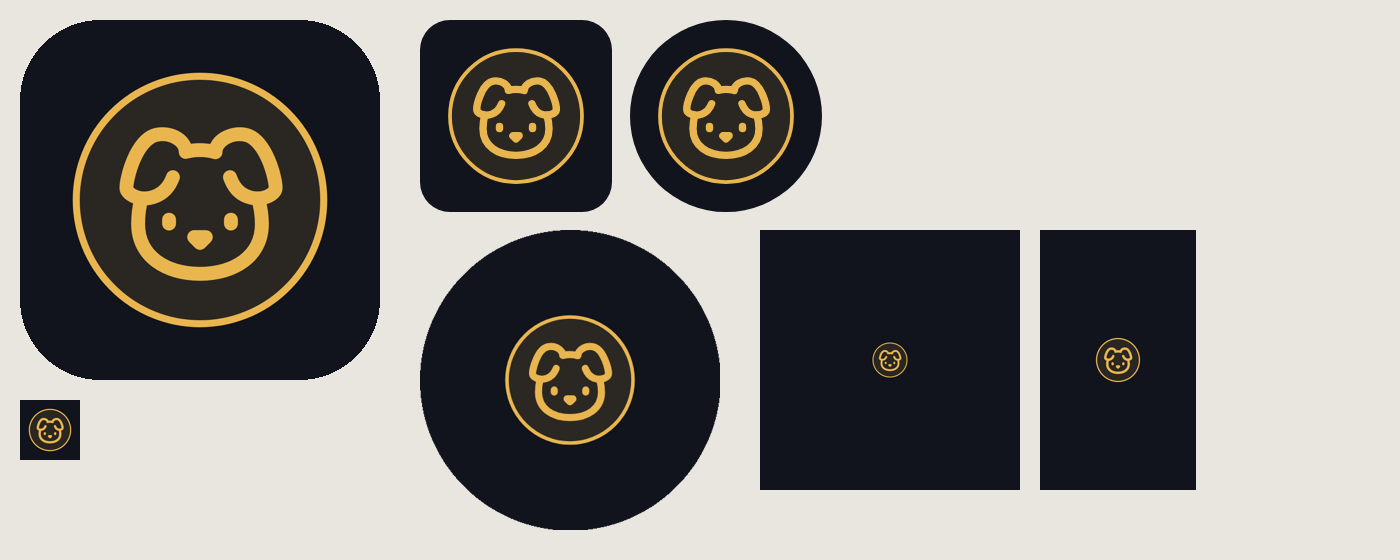
When I asked where the puppy came from, the answer was Lucide’s dog icon. That’s the same open-source icon set the app already uses for its interface, so it gets credited on the About screen like the rest. No AI art in Cerberus, the icon included.
Around the same time, the app stopped calling itself a 5E app. The way I see it, Cerberus is a TTRPG companion that only plays one game right now. It isn’t built around that one game. So “Fifth Edition” shows up on its own lobby tile and its own screen, and everywhere else (the About screen, the homebrew site, the README) Cerberus is a TTRPG companion. TTRPG is well known and shorter anyway. It follows from the lobby we built back in week five: the app’s shape already pointed past one game, and now the words do too.
Also in the pile
- Companions aim for themselves. If a player controls a companion, I wanted it to get its own target tap, since a player might want it going after a different enemy than their hero. Now it does, and its hit waits for Deal just like a hero’s.
- Rest swaps moved onto the sheet. Weapon Mastery, a Druid’s land, Wild Shape forms, Hunter’s Prey and a Wizard’s cantrip all swap from there now. Level-up gives Bard, Sorcerer and Warlock one spell swap a level.
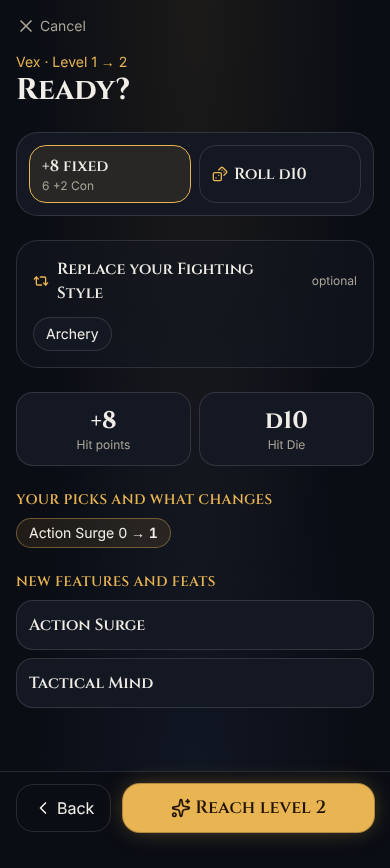
- The hit point pick comes first. On the level-up Ready screen it’s now at the top, and it glows until you take it.
- Dead means dead. A dead hero uses, casts and attacks nothing until someone revives them, and Exhaustion 6 kills.
- Easier to get people to the table. Until a hero sits, the DM’s Table tab shows the join code and QR right on the empty table instead of behind a small icon. Once someone sits, it folds back to the chip next to the table’s name.
- Grip buttons match. The one-hand and two-hand damage buttons look the same now, and the two-hand one hides when both grips roll the same die. No point in a button that does the same thing.
- A Multiattack’s free uses come once on the DM’s monsters, Prone lasts until the hero stands, and an imported homebrew pack is never the device’s own to edit or share.
What didn’t go great
A bug came back. I got stuck on the store page again and couldn’t swipe back, and I was pretty sure we’d fixed that already. We had. It just never got a test. This time it did, and the fix covers the inventory and every popup, not only the store. Then there was a flicker during the back swipe, and that one took two tries. Opus got it on the second: popups no longer slide out twice.
We also ran out of hosted build minutes for the month on Nov 20. Partly our own doing, since we’d just split the checks into more parallel jobs so they’d run faster. Which, sure, they did. My question was why we were leaning on hosted builds at all for things my own machine can run for free, so the checks run there now.
65 PRs merged, 21 test runs, and one major per fight pass that just would not quit. That’s week eight. See you next week.